

In Rock Hill, South Carolina, a dependable primary care routine can make it easier to stay ahead of everyday health needs while balancing work, family, commuting, and community life. Whether you are scheduling a yearly checkup or managing an ongoing concern, it helps to contact a primary care services in Rock Hill when you need a consistent place to discuss prevention, symptoms, medications, and next steps.
Health routines work best when they fit real life. Rock Hill residents may be dealing with hot summer days, seasonal allergies, busy school calendars, or the demands of caring for relatives. A practical plan creates a reliable connection with a care team, gives you reminders for preventive needs, and helps ensure small changes do not get overlooked.
Why A Primary Care Routine Matters in Rock Hill
Primary care is not limited to treating a cold, filling a prescription, or responding to a single urgent problem. A regular relationship with a primary care professional gives you a place to review changes over time, including blood pressure readings, sleep patterns, stress, weight changes, lab results, and medication effects. This broader view can help guide decisions before a concern becomes more difficult to manage.
Continuity is especially valuable when life gets busy. Instead of trying to remember every past symptom or test at each new visit, you can build on an established health record and a clear follow-up plan. Routine appointments can also help identify which concerns need specialist evaluation and which can be addressed with practical changes at home.
Mental and emotional health belong in the same conversation. People who have experienced trauma, anxiety, sleep disruption, or difficult memories may benefit from discussing symptoms openly with a trusted clinician, including options for PTSD care when trauma-related symptoms are affecting daily life.
How To Build A Personal Care Routine
A better routine does not require a complicated health notebook or perfect habits. Start with a few repeatable steps that make appointments and follow-up easier to manage.
- Choose a regular care source. Establish a primary care practice for routine questions, preventive care, and non-emergency health concerns.
- Make a current health list. Note symptoms, diagnoses, allergies, medications, supplements, health goals, and recent changes.
- Review personal risks. Consider family history, tobacco or alcohol use, activity level, stress, sleep, and existing conditions.
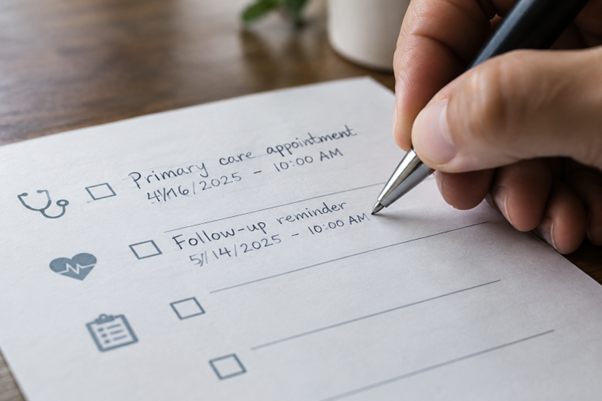
- Use reminders. Set calendar alerts for appointments, refill requests, test results, vaccines, and recommended rechecks.
- Confirm the next step. Before leaving a visit, ask when you should expect results and whether you need labs, referrals, or another appointment.
What To Review Each Year
An annual review is a useful reset, but the right schedule differs from person to person. Someone managing diabetes, high blood pressure, depression, asthma, or another chronic condition may need more frequent contact. During a routine visit, consider reviewing:
- Blood pressure, heart health, weight, nutrition, and physical activity
- Sleep quality, stress, mood, and emotional well-being
- Medication effectiveness, side effects, refill needs, and possible interactions
- Vaccination status and age-appropriate screening needs
- Diabetes and cholesterol risk when relevant
- Dental, vision, hearing, and mobility concerns
- Changes to family health history, including new diagnoses among close relatives
How To Prepare For A Primary Care Visit
Good preparation can make a short appointment far more productive. Bring an updated list of medications and supplements, including doses if you know them. Write down symptoms, when they started, what makes them better or worse, and whether they interfere with work, sleep, exercise, or relationships.
It is also helpful to choose your three most important questions in advance. If you track home blood pressure, blood glucose, headaches, sleep, or another measurement, bring those notes. Before the visit ends, ask what the plan is, when results should be available, and what symptoms would warrant faster attention.
Preventive Care That Deserves Attention
Prevention is an ongoing process, not a once-a-year task. It can include vaccines, screening tests, counseling, healthy routines, and conversations about risk factors. The preventive services covered by many health plans may include recommended services without cost sharing in certain circumstances, although coverage details can vary by plan and service.
Important Areas To Discuss
- Routine and seasonal immunizations
- Cancer screenings based on age, sex, history, and individual risk
- Heart disease risk, blood pressure, cholesterol, and diabetes testing
- Tobacco cessation, alcohol use, and substance use support
- Mental health screenings and stress-management strategies
- Nutrition and movement goals that are realistic for your schedule
Preventive recommendations are not identical for every adult. The clinical preventive service recommendations used by primary care professionals can help guide discussions, but personal history and professional judgment should shape the final plan.
Managing Ongoing Health Conditions
For Rock Hill residents living with chronic conditions, primary care can provide a consistent home base. Keep a record of symptoms and relevant home readings between visits, review whether medications remain effective, and confirm when lab work or follow-up testing is due. Make sure your primary care team knows about the care you receive from specialists, urgent care clinics, or hospitals.
For example, a person with high blood pressure may bring home readings to an appointment, review medication side effects, discuss sodium intake and activity, and schedule a recheck. This type of regular follow-up can reveal patterns that a single office reading may not show.
Questions About Access And Cost
Practical barriers can disrupt even the best health intentions. When choosing or using a primary care practice, ask how quickly routine and urgent appointments are available, whether virtual visits are appropriate for some concerns, how after-hours questions are handled, and how records are shared with other professionals.
Ask for clear information about insurance participation, copays, lab billing, prescriptions, referrals, and preventive-care coverage before services are provided. Understanding these details can help you plan care without unexpected confusion later.
A Simple Health Action Plan for Rock Hill Residents
- Schedule or confirm a routine primary care visit.
- Update your medication list, allergy list, and family health history.
- Ask which screenings, vaccines, or labs may be due.
- Write down three health questions or goals before your next appointment.
- Set reminders for test results, refills, referrals, and follow-up visits.
- Keep contact information for routine care, urgent care, and emergency services accessible.
Conclusion
A strong primary care routine in Rock Hill does not have to be complicated. It should be personal, consistent, and realistic enough to maintain through changing seasons and busy schedules. By preparing for visits, tracking preventive needs, communicating clearly, and completing follow-up steps, you can take a more active role in your health throughout 2026.
