

Being told that there is not enough bone for traditional upper-jaw dental implants can feel discouraging, but it does not always mean implant treatment is impossible. For carefully selected patients, zygomatic dental implants Miles City MT may offer an alternative approach. Big Sky Smile Center evaluates complex implant concerns individually, with treatment recommendations based on oral health, anatomy, medical history, restorative needs, and personal goals.
Zygomatic implants are designed for severe bone loss in the upper jaw. Instead of relying only on the remaining maxillary bone, these implants are anchored in the zygomatic bone, commonly called the cheekbone. This approach can be considered when conventional implants would not have sufficient upper-jaw support.
Why Severe Upper-Jaw Bone Loss Does Not Always End the Conversation
Bone loss in the upper jaw can occur after long-term tooth loss, gum disease, denture use, trauma, or other oral-health changes. Traditional implants need adequate bone at the planned implant site, so significant bone loss may make a conventional approach more difficult. However, a patient who is not a candidate for standard implants may still have other options.
At Big Sky Smile Center, Dr. Barrie Matthews and the team offer consultations for patients who have previously been told they cannot receive traditional implants. Depending on the evaluation, options may include bone grafting, conventional implants, pterygoid implants, zygomatic implants, or another restorative plan. No treatment path is appropriate for every person, which is why imaging and a clinical examination are essential.
What Are Zygomatic Dental Implants?
Zygomatic dental implants are longer than standard implant posts and are placed at an angle to engage the dense cheekbone. Big Sky Smile Center explains that these implants are often about 50 millimeters long, although the appropriate length, angle, and position depend on the patient’s anatomy and surgical plan.
Like conventional implant-supported restorations, a zygomatic treatment plan typically includes three main parts:
- A titanium implant post: The portion placed into bone to provide support.
- An abutment: The connector between the implant and the replacement teeth.
- A prosthesis: The fixed replacement teeth, which may be part of a full-arch restoration.
How Zygomatic Implants Differ From Traditional Implants
- Anchorage site: Traditional implants are placed in the jawbone. Zygomatic implants use the cheekbone as their primary anchorage site.
- Typical use: Conventional implants may be suitable when adequate jawbone is available. Zygomatic implants may be considered for extensive upper-jaw bone loss.
- Planning requirements: Both require evaluation and imaging, but zygomatic cases require detailed surgical and restorative planning.
- Restorative role: Zygomatic implants are often used as part of a complex full-arch treatment plan rather than as a routine replacement for a single missing tooth.
Zygomatic implants are not automatically better than traditional implants. When standard implants can be placed predictably and appropriately, they may still be the preferred option. The goal of a consultation is to identify the approach that makes sense for the individual patient, not to fit every patient into the same procedure.
What Research Says About Outcomes and Risks
Published research has reported high implant survival rates for zygomatic implant therapy in severely atrophic upper jaws. A systematic review of zygomatic implant survival and complications that included 101 studies reported mean survival rates of 97.61% in retrospective studies, 98.53% in prospective non-randomized studies, and 95.92% in randomized trials. The authors also cautioned that much of the available evidence came from non-randomized research.
Those results do not guarantee an individual outcome. Surgical technique, anatomy, general health, oral hygiene, prosthetic design, and follow-up care all matter. Potential complications discussed in the literature include sinusitis, infection, oroantral communication, bleeding, soft-tissue concerns, and prosthetic complications. A review of long-term zygomatic implant outcomes can help patients understand why ongoing monitoring and informed treatment planning are important.
How Big Sky Smile Center Evaluates Candidates
A zygomatic implant consultation should be comprehensive. At Big Sky Smile Center, the process may include the following steps:
- Discussion of concerns: Patients can share their tooth-loss history, previous implant evaluations, denture problems, goals, and medical information.
- Clinical examination: The team reviews teeth, gums, bite function, remaining bone, and signs of infection or disease.
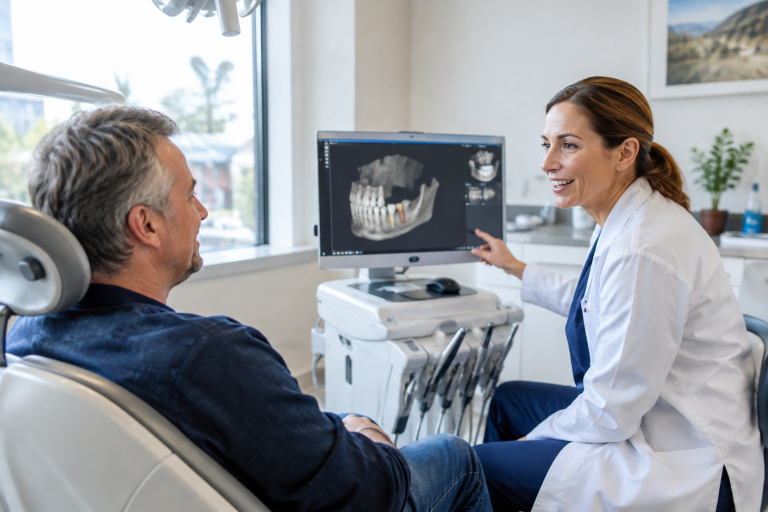
- Three-dimensional planning: Imaging can help assess upper-jaw anatomy and support precise treatment planning.
- Review of alternatives: The team can compare conventional implants, grafting, zygomatic implants, pterygoid implants, and full-mouth options when appropriate.
- Personalized recommendation: The final plan should reflect the patient’s clinical needs, preferences, expected timeline, and budget.
What to Expect During Treatment and Healing
Big Sky Smile Center states that zygomatic implant surgery generally takes several hours and that complete healing may take about four to eight months, depending on the case. Surgical treatment is followed by planned checkups, healing assessments, and prosthetic care. Some patients may receive temporary teeth during the treatment process, while the timing and design of the final restoration depend on the individual plan.
Comfort and Dental Anxiety
Complex implant care can be stressful, particularly for people with a history of difficult dental experiences. Big Sky Smile Center offers IV sedation and general anesthesia services for appropriate patients. Anesthesia suitability depends on the person’s health history and evaluation, so patients should ask about preparation, medications, monitoring, recovery expectations, and aftercare before surgery.
Full-Mouth Restoration and Ongoing Care
Zygomatic implants may be part of a larger treatment plan for people with extensive tooth loss, failing teeth, or unstable dentures. A fixed full-arch prosthesis can be designed to restore chewing function, improve stability, and create a planned bite. Long-term success also requires regular professional follow-up and consistent home care around the prosthesis and supporting tissues.
Questions to Ask Before Choosing Treatment
- Why are zygomatic implants being recommended for my situation?
- Could conventional implants or grafting still be appropriate?
- What are the surgical, sinus-related, and prosthetic risks in my case?
- What type of temporary and final teeth are planned?
- What healing, maintenance, and follow-up visits should I expect?
- Which sedation or anesthesia option may be appropriate?
- What is included in the treatment estimate, and are financing options available?
Request Zygomatic Dental Implant Care in Miles City
Patients with severe upper-jaw bone loss, loose dentures, failing restorations, or a previous implant refusal can request a consultation with Big Sky Smile Center at 2600 Main Street, Miles City, MT 59301. The consultation is the appropriate first step for determining whether zygomatic implants, pterygoid implants, grafting, traditional implants, or another treatment option is suitable.

