

Key Takeaways
- Make a complete inventory before selecting a unit size.
- Measure large furniture, appliances, equipment, and unusually shaped belongings.
- Consider unit height, door clearance, and room for safe walkways.
- Plan differently for frequent-access storage and long-term storage.
- Compare features such as climate control, drive-up access, and rental terms alongside size.
Choosing the right storage space starts with more than estimating how many boxes you have. Whether you are moving across Sauk Rapids, clearing space during a renovation, downsizing, or organizing business supplies, comparing Storage Units with a clear plan can help prevent a cramped layout or unused space.
Minnesota’s changing seasons are another reason to prepare carefully. Furniture, holiday decorations, outdoor equipment, documents, and electronics may all need different packing methods, protection, and access arrangements depending on how long they will be stored.
Why Storage Unit Size Matters
A unit that is too small can make loading, unloading, and finding belongings difficult. A unit that is much larger than necessary may leave you paying for space you do not use. The best choice depends on the volume and shape of your belongings, how they can be stacked, and whether you need to retrieve items regularly.
Take Inventory Before Renting
Before comparing sizes, walk through every room, the garage area, the shed, and the workspace. List furniture, appliances, boxes, tools, sports equipment, and seasonal items. Mark belongings that cannot be stacked, folded, or disassembled, including bicycles, shelving, lawn equipment, and large storage bins.
When evaluating local self-storage facilities, bring that inventory with you. A simple phone note or spreadsheet makes it easier to compare your belongings with available dimensions and identify items that need to stay near the door.
Common Storage Unit Sizes
Unit dimensions vary, but these common sizes can provide a useful starting point. Always confirm the actual interior dimensions, ceiling height, and door opening before making a final decision.
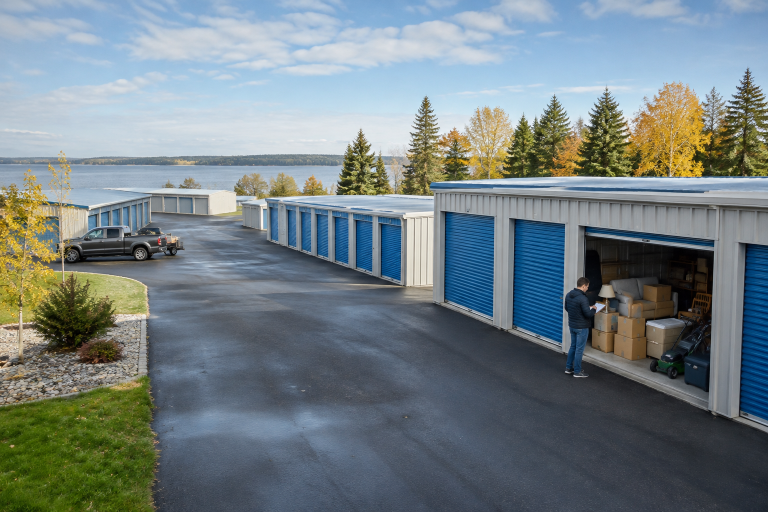
- 5-by-5 feet: Often suitable for boxes, clothing, small décor, and other closet-sized storage needs.
- 5-by-10 feet: May work for the contents of a small bedroom, a studio, or a limited number of furnishings and boxes.
- 10-by-10 feet: Can accommodate furniture, appliances, and packed boxes from several areas of a smaller home.
- 10-by-15 feet: Provides additional space for larger furniture and several rooms’ worth of household belongings.
- 10-by-20 feet: May be useful for a larger household, bulky equipment, or inventory that needs a wider aisle.
- 10-by-30 feet or larger: Often considered for large households, commercial items, vehicles, or substantial equipment, subject to facility rules.
Measure Large Items First
Large pieces usually determine the minimum unit size. Measure the length, width, and height of sofas, mattresses, refrigerators, workbenches, shelving, motorcycles, and other oversized belongings. Also measure the widest point, including handles, doors, and attached components. A unit may have enough floor area on paper but still be difficult to load if the doorway does not provide enough clearance.
Use Vertical Space Safely
Storage capacity includes both height and floor area. Use sturdy, similarly sized boxes when possible, place heavier boxes at the bottom, and keep fragile items out of unstable stacks. Disassembled furniture can also reduce wasted space. Do not stack items high enough to create a falling hazard or block the door, lights, vents, or an intended walkway.
Plan Around Access Needs
Long-term storage can usually be packed more tightly than a unit you expect to visit every week. For frequent access, leave a narrow center aisle and put seasonal items, paperwork, tools, or business supplies near the front. Label boxes on more than one side and keep a basic map of where categories are stored.
For items that will remain in place for months, group them by room or category and use covers where appropriate. Moisture can contribute to indoor problems such as condensation and mold, so packing items dry and understanding how moisture problems develop can be helpful when preparing belongings for storage.
Compare More Than Square Footage
Size is important, but it is not the only practical consideration. Climate control may be worth considering for sensitive belongings such as wooden furniture, electronics, artwork, musical instruments, or documents. Drive-up access can simplify loading heavy appliances, tools, or bulky equipment. Ask about door dimensions, access hours, lighting, locks, insurance requirements, and payment policies before signing an agreement.
Review facility rules before packing items that could create a safety concern. Products such as paints, cleaners, oils, batteries, and pesticides may require special handling, and the EPA’s household hazardous waste guidance explains why labels and disposal instructions matter.
Avoid Common Sizing Mistakes
- Estimating based on box count alone.
- Forgetting appliances, mattresses, and large furniture.
- Ignoring ceiling height and door clearance.
- Filling every inch without leaving access space.
- Assuming identically advertised unit sizes have identical layouts.
- Failing to account for belongings that may be added later.
For example, a one-bedroom apartment may fit into a relatively compact unit when furniture is disassembled, and boxes can be stacked. The same belongings may require a larger layout during a renovation if boxes, supplies, and furniture must remain easy to reach.
A Simple Five-Step Planning Method
- List everything: Include items from the home, garage, shed, vehicle, and existing storage.
- Measure the largest pieces: furniture, appliances, equipment, and vehicles.
- Separate by access: Identify what you will need soon and what can stay packed.
- Sketch a layout: Map where large items, boxes, and an aisle will go.
- Confirm unit details: Check dimensions, height, door size, features, and policies.
Frequently Asked Questions
How do you know what size storage unit you need?
Create an inventory, measure the largest items, and consider whether you need room to walk through the unit. Your access needs can be just as important as the total amount of belongings.
Is a 10-by-10 storage unit big enough for a home?
It may be enough for belongings from a smaller home or several rooms, but the answer depends on furniture size, box count, stacking ability, and the need for an aisle.
Should you choose a larger unit if you are uncertain?
A slightly larger unit may make sense when items are bulky, irregularly shaped, or needed often. Compare the added cost with the inconvenience of repacking or renting additional space later.
Final Thoughts
Selecting a storage unit in Sauk Rapids does not have to be a guess. A careful inventory, accurate measurements, and a simple layout plan can help you choose a space that fits your belongings and supports the way you plan to use them.

