

When we discuss veneers, we are talking about thin, custom-made shells designed to cover the front surface of your teeth. While the term “ceramic” is often used interchangeably with “porcelain” in casual conversation, in dentistry, there is a distinct difference between composite resin—often colloquially called “ceramic” or “bonding”—and high-quality feldspathic porcelain.
What Are Ceramic Composite Veneers?
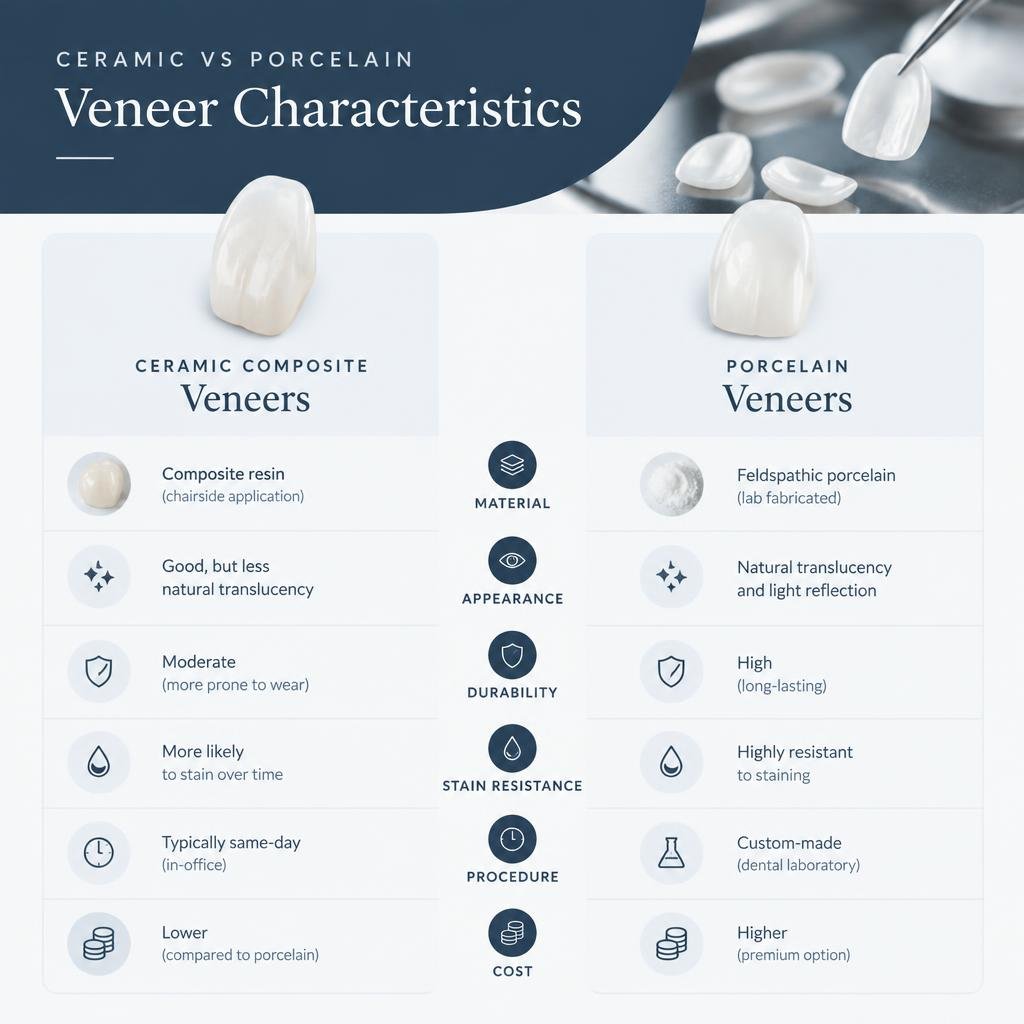
Composite veneers are crafted from a specialized resin material. This process is typically performed “chairside,” meaning your dentist applies the putty-like material directly to your teeth, shapes it, and hardens it using a specialized light. Because the procedure is done directly in the office, it is often faster and less invasive. It is a popular choice for those looking for a quick fix for minor chips or gaps. However, because composite resin is a porous material, it is more susceptible to staining over time from coffee, tea, or red wine.
What Are Traditional Porcelain Veneers?
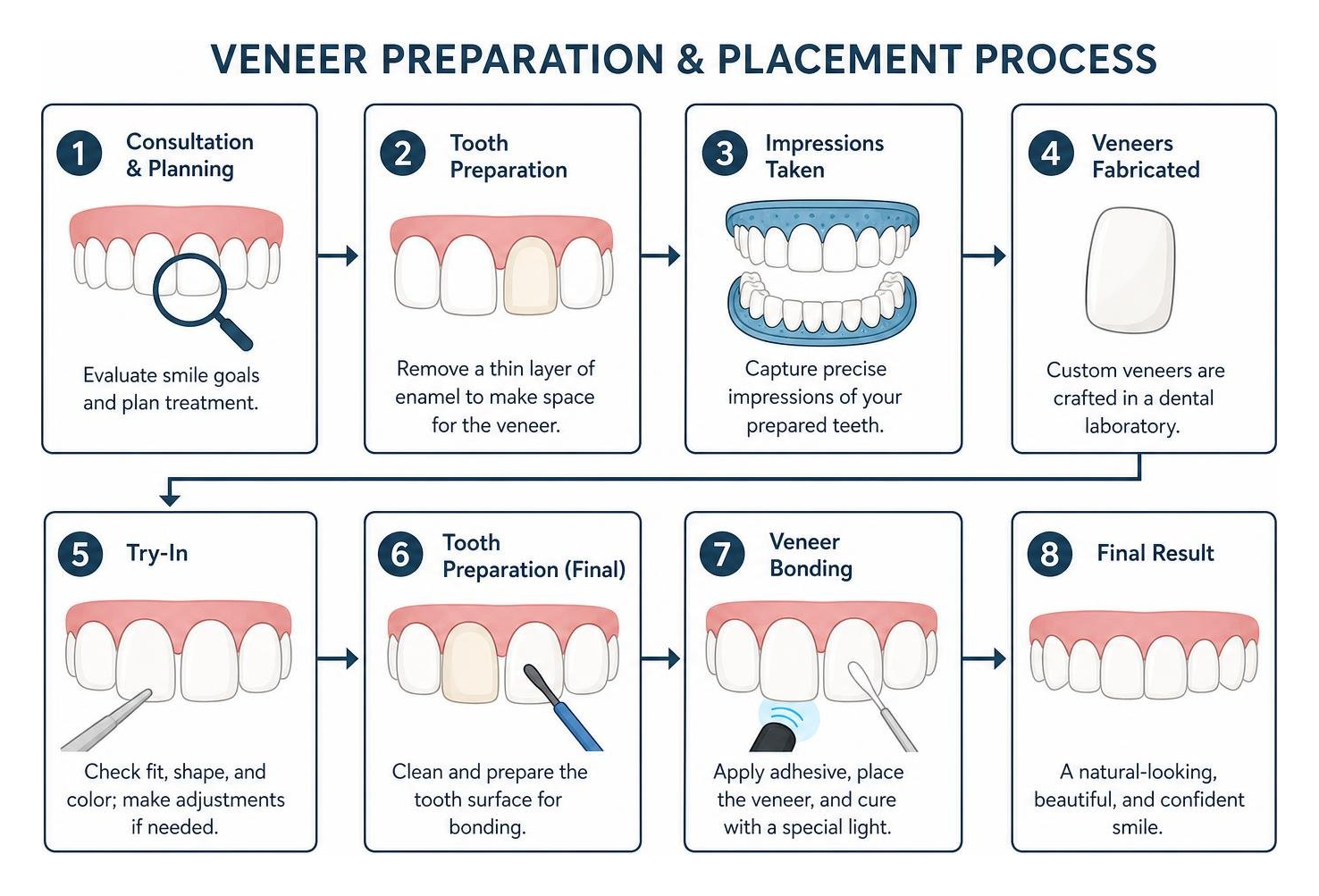
Porcelain veneers are the gold standard in cosmetic dentistry. These are not applied as a putty; instead, they are custom-fabricated in a dental laboratory based on precise impressions of your teeth. Made from high-quality, glass-like ceramic materials, they mimic the natural translucency and light-reflecting properties of your original enamel. Because they are baked in a kiln at high temperatures, they are incredibly dense, smooth, and resistant to the staining that often plagues composite alternatives.
Comparing Ceramic vs Porcelain Veneer Costs

When evaluating the financial aspect of your smile makeover, it is important to view the expenditure as a long-term investment rather than a simple transaction. While composite options may appear more attractive on a balance sheet today, the total cost of ownership—including maintenance and eventual replacement—can shift the perspective.
National Average Porcelain Veneer Costs
The financial commitment for porcelain veneers is higher due to the involvement of skilled dental technicians and the use of premium, laboratory-grade materials. While prices fluctuate based on your region, you will find that porcelain veneers represent a significant step up in quality compared to composite resin. When you research porcelain veneer costs, keep in mind that you are paying for the artistry, the durability of the material, and the longevity of the results.
Factors That Influence Porcelain Veneer Costs
Several variables dictate the final price of your treatment:
- Dentist Expertise: Highly specialized cosmetic dentists with advanced training often command higher fees due to their ability to achieve superior aesthetic outcomes.
- Geographic Location: Costs in major metropolitan areas are typically higher than in rural regions due to overhead differences.
- Tooth Preparation: The complexity of the underlying tooth structure and how much reshaping is required can influence the time and labor involved.
- Number of Teeth: Most patients opt for a set of six to eight veneers to ensure a uniform smile, which naturally increases the total investment compared to a single-tooth repair.
Durability, Aesthetics, and Tooth Preparation
Choosing between these materials often comes down to how much “wear and tear” you expect your smile to endure.
Lifespan and Stain Resistance
Porcelain is significantly harder and more durable than composite resin. While composite veneers may need to be replaced every five to seven years due to wear, chipping, or discoloration, porcelain veneers are designed to last 10 to 15 years, and in many cases, even longer with excellent oral hygiene. If you are a fan of dark-pigmented drinks or are looking for a solution that will maintain its luster for over a decade, porcelain is the superior choice.
Enamel Preparation and Procedure Reversibility
It is a common misconception that veneers are a reversible procedure. In most cases, a small amount of your natural enamel must be removed to accommodate the veneer and ensure a natural, non-bulky fit. Because this enamel does not grow back, the decision to get veneers should be considered permanent.
While composite bonding sometimes requires less aggressive preparation, the trade-off is the shorter lifespan of the material. Porcelain, while requiring a slightly more involved preparation phase, provides a stronger, more stable foundation that integrates seamlessly with your gum line.
Insurance, Payment Plans, and Financing Options
Most dental insurance plans categorize veneers as an “elective” or “cosmetic” procedure. Consequently, they are rarely covered by standard insurance policies. However, do not let this discourage you. Many patients utilize Health Savings Accounts (HSA) or Flexible Spending Accounts (FSA) to cover the costs with pre-tax dollars.
Additionally, many dental offices offer third-party financing options. These plans allow you to spread the total cost of your treatment over several months or years, often with low or no interest, making a high-quality smile accessible regardless of your immediate budget.
Frequently Asked Questions About Veneers
How long do porcelain veneers last compared to ceramic composite veneers?
Porcelain veneers are the clear winner in terms of longevity, typically lasting 10 to 15 years, with some patients enjoying them for up to 20 years. Composite veneers generally require replacement or significant maintenance after 5 to 7 years.
Are ceramic or porcelain veneers reversible?
Because both procedures involve the removal of a thin layer of natural enamel to ensure the veneer sits flush with the tooth, the process is considered permanent. You will always need some form of restoration on those teeth once the preparation is complete.
Does dental insurance cover cosmetic veneers?
Generally, no. Since veneers are usually performed for aesthetic reasons rather than to treat a disease or structural deficiency, they are typically considered elective. We always recommend checking with your specific provider, as some plans may offer partial coverage if a veneer is deemed medically necessary to restore a damaged tooth.
Conclusion
Deciding between ceramic (composite) and porcelain veneers is a personal choice that balances your immediate budget against your long-term aesthetic goals. If you are looking for a cost-effective, short-term solution for a minor issue, composite resin may serve your needs. However, if you are seeking a durable, stain-resistant, and natural-looking transformation that will stand the test of time, porcelain is almost always the recommended path.
The best way to determine the right material for your unique smile is to schedule a consultation with a trusted dental professional. They can evaluate your tooth structure, discuss your lifestyle habits, and help you navigate the porcelain veneer costs to ensure you feel confident and excited about your new smile.

