

What if we told you that reaching your peak physical potential isn’t just about training harder, but about training smarter? For athletes and active individuals alike, optimizing fitness and athletic performance is a journey. It goes beyond simple workouts. It combines science-backed strategies with personalized approaches.
We believe true athletic excellence comes from a careful mix of physical development and technical skill. It also requires smart recovery and nutrition. In this extensive guide, we will dive deep into advanced training methods. We’ll explore functional training principles and how they differ from traditional resistance training. We will also examine their impact on both health-related and skill-related fitness components.
We will uncover how functional training can boost your sport-specific technical performance across various sports. We’ll share recommended training parameters for effective programs. We will also discuss cutting-edge recovery methods and personalized nutrition strategies. These include innovative approaches like in-home electro-muscle stimulation. Finally, we’ll explore how technology and AI are shaping the future of athletic conditioning. Join us as we build a holistic framework for high performance and lasting athletic longevity.
The Science of Fitness and Athletic Performance: Functional vs. Traditional Training
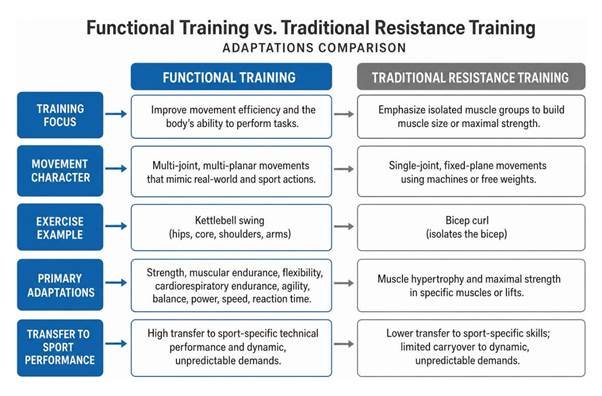
In the realm of athletic development, the distinction between functional training and traditional resistance training is paramount. Traditional resistance training often emphasizes isolated muscle groups, typically through fixed-plane movements using machines or free weights. The goal might be hypertrophy (muscle growth) or maximal strength in a specific lift. Functional training, conversely, focuses on multi-joint, multi-planar exercises that mimic real-world movements and sport-specific actions. Its core principle is to improve movement efficiency and the body’s ability to perform tasks by training muscles to work together in kinetic chains, rather than in isolation.
Consider a bicep curl versus a kettlebell swing. The bicep curl isolates the bicep, while the kettlebell swing engages the hips, core, shoulders, and arms in a coordinated, explosive movement. This difference in exercise selection and underlying philosophy means that functional training aims for a more direct biomechanical transfer to athletic performance. It prepares the body for the dynamic, unpredictable demands of sport and daily life, emphasizing stability, coordination, and overall movement quality. This holistic approach ensures that the strength gained in the gym translates effectively to the field, court, or track.
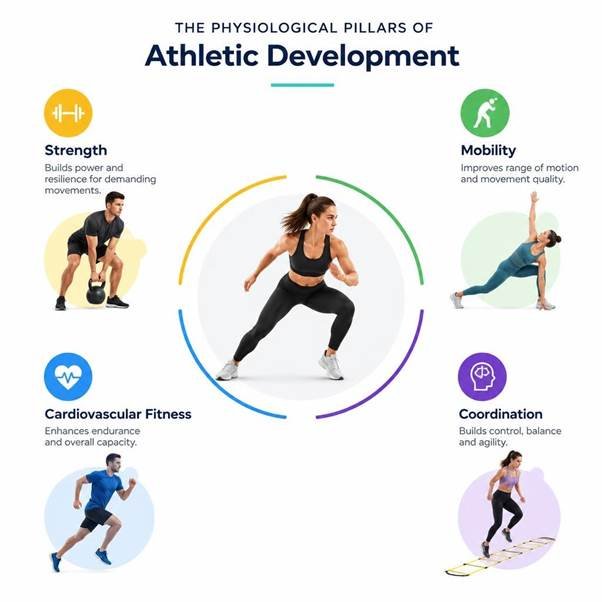
Assessing Health-Related Fitness and Athletic Performance Components
Functional training’s influence extends across various health-related physical fitness components, which are foundational for any athlete. Our research indicates that functional training significantly improves physical and technical performance across 14 different sports.
- Muscular Strength: A systematic review highlighted that 13 out of 22 studies focusing on physical performance found functional training consistently improved muscular strength. This was observed across diverse sports like soccer, basketball, tennis, and baseball. This suggests that while not always targeting maximal lifts, functional exercises effectively build the strength needed for dynamic movements.
- Muscular Endurance: By engaging multiple muscle groups over extended periods, functional training enhances the ability of muscles to sustain effort, crucial for prolonged athletic activity.
- Flexibility: Functional training often incorporates movements that challenge and improve range of motion. For instance, 6 out of 10 studies on flexibility reported significant improvements in sit-and-reach and other flexibility tests following functional training protocols. This is vital for injury prevention and efficient movement.
- Cardiorespiratory Endurance: While not its primary focus, functional training, especially when programmed with high intensity and short rest periods, can contribute to cardiorespiratory improvements. The continuous, dynamic nature of many functional exercises elevates heart rate and challenges the cardiovascular system.
Neuromuscular Adaptations in Skill-Related Athletic Fitness
Beyond general fitness, functional training profoundly impacts skill-related physical fitness components, which are directly tied to athletic prowess. These are the attributes that allow athletes to react, move, and perform with precision.
- Agility: The ability to change direction quickly and efficiently is a hallmark of many sports. Functional training improved agility in 8 out of 10 studies, measured by tests like t-tests, shuttle runs, and hexagonal agility tests. This is because functional drills often involve rapid changes in direction, acceleration, and deceleration.
- Balance: Both static and dynamic balance are critical for stability and injury prevention. Functional training significantly enhanced balance performance in all four studies that measured it, including dynamic balance and Y-balance tests. This highlights its role in strengthening core stabilizers and proprioception.
- Power: Defined as the ability to generate force quickly, power is essential for explosive movements. While 8 out of 13 studies reported significant improvements in power (e.g., vertical jump, standing long jump) after functional training, 5 studies showed no significant difference. This mixed result suggests that while functional training can build power, specific power training modalities might be needed for maximal gains.
- Speed: Functional training improved speed performance (linear sprint and change-of-direction) in 12 out of 15 studies, with significant between-group differences observed in 7 studies. This indicates its effectiveness in improving the rate of force development and efficient movement patterns.
- Reaction Time: Though less frequently measured, the multi-planar and unpredictable nature of some functional drills can contribute to improved reaction time by training the neuromuscular system to respond quickly to stimuli.
Sport-Specific Technical Transfer and Program Parameter Design
The ultimate goal of athletic conditioning is to enhance performance in a specific sport. Functional training excels here by bridging the gap between general physical preparedness and sport-specific technical execution. By mimicking the motor learning patterns and neuromuscular control required in competition, functional training facilitates a high degree of transfer specificity. This means the strength, power, and agility developed in training directly translate to improved technical skills during a game or event.

Evidence Across Competitive Sporting Disciplines
The impact of functional training on sport-specific technical performance is well-documented across a wide array of disciplines:
- Basketball: Studies have shown improvements in shooting accuracy and overall simulated-game performance for basketball players.
- Tennis: Athletes demonstrated enhanced stroke depth and accuracy, crucial for competitive play.
- Badminton: Players experienced gains in hitting accuracy, directly affecting their ability to place shots strategically.
- Baseball: Pitching and batting speed both showed significant gains, indicating improved rotational power and throwing mechanics.
- Taekwondo: Athletes exhibited improved core endurance and balance, vital for complex kicks and stances.
- Dragon-boat Racing: This sport, requiring synchronized multi-directional movement, also saw consistent improvements.
These examples underscore functional training’s ability to refine the neuromuscular control necessary for precise technical execution, making athletes not just stronger, but also more skilled.
Optimal Dose-Response: Duration, Volume, and Session Length
Determining the ideal training parameters for functional training is crucial for maximizing its benefits. While no single “optimal” protocol fits all athletes and sports, research provides valuable guidelines:
- Duration: Intervention durations in studies ranged widely, from as short as 8 days to as long as 10 months. This highlights that even relatively short, focused interventions can yield measurable changes in performance. For sustained gains and deeper adaptations, longer programs are generally more effective.
- Frequency: The most common frequency observed was 3 sessions per week. However, studies also reported frequencies ranging from 2 to 4 times per week. The optimal frequency often depends on the athlete’s overall training load, recovery capacity, and specific goals.
- Session Length: Functional training sessions varied significantly in length, from 10 minutes to 90 minutes. Shorter, higher-intensity sessions can be effective for neuromuscular priming or skill-focused drills, while longer sessions allow for more comprehensive conditioning and volume accumulation.
- Progressive Overload: Regardless of duration, frequency, or session length, the principle of progressive overload remains fundamental. Gradually increasing the challenge—whether through intensity, volume, complexity of movement, or reduced rest—is essential for continuous adaptation and improvement.
- Athlete Experience: Training parameters must be tailored to the athlete’s experience level. Beginners may start with lower frequencies and shorter durations, focusing on mastering movement patterns, while advanced athletes can handle higher volumes and intensities.
Advanced Recovery, Nutrition, and Neuromuscular Priming
Achieving peak athletic performance is not solely about what happens during training; it’s equally about how the body recovers and is fueled. Advanced recovery strategies, precise nutrition, and neuromuscular priming techniques are critical components of a holistic high-performance framework. They manage fatigue, optimize metabolic pathways, and ensure the athlete is ready to perform at their best.

The 4Ps Nutritional Architecture for High Performance
Nutrition is the cornerstone of an athlete’s success, influencing energy availability, muscle glycogen stores, hydration status, and recovery. We advocate for a strategic model known as the 4Ps framework: Personalise, Periodise, Prefuel, and Prepare.
- Personalise: Nutrition plans must be highly individualized. This involves considering an athlete’s unique phenotype (age, sex, body mass, sweat rate), genotype, biomarkers, preferences, and specific goals. For instance, a personalized hydration plan based on an athlete’s sweat rate can significantly reduce heart rate and skin temperature during prolonged exercise.
- Periodise: Nutritional intake should align with training phases and competition cycles. Carbohydrate periodization, such as “train-low, compete-high” strategies, can enhance metabolic adaptations during training while ensuring optimal glycogen stores for competition. This ensures nutrient availability matches the body’s demands, supporting specific adaptations and recovery.
- Prefuel: Strategic fueling before an event is crucial. This includes carbohydrate loading (6–10 g/kg body mass over 24–36 hours) to maximize glycogen stores and consuming a high-glycemic index meal (1–3 g/kg) 3–4 hours pre-event. Proper hydration, with approximately 7 ml/kg fluid 2–3 hours before the event, is also essential.
- Prepare: During an event, sustained energy and hydration are key. This involves in-event carbohydrate intake (30–90 g/hour, depending on duration and intensity) alongside fluid. Ergogenic supplements like caffeine or nitrates can also be strategically used to enhance performance, but always with professional guidance.
Post-Activation Performance Enhancement and Neuromuscular Priming
Neuromuscular priming is a sophisticated technique aimed at acutely enhancing performance immediately before an athletic event or high-intensity training. One of the most effective methods is Post-Activation Performance Enhancement (PAPE). PAPE leverages the body’s physiological response to prior conditioning activity, where a brief, intense exercise can temporarily increase subsequent power and force production.
Research indicates that the choice of conditioning activity significantly impacts the PAPE effect and its optimal recovery window:
- Elastic Resistance: Multi-dimensional elastic band (MEB) activation, such as continuous vertical jumps with elastic resistance, can induce measurable performance gains as early as 3 minutes post-activation. The most pronounced effects often occur between 3 and 6 minutes, with an effective window extending up to 15 minutes. This makes elastic resistance a highly practical and time-efficient strategy for pre-competition warm-ups, especially when time is limited.
- Heavy Barbell Squats (HBS): Traditional heavy resistance exercises, like heavy barbell squats (e.g., 4 reps at 90% of 1RM), also induce PAPE. However, due to the greater fatigue associated with heavy loads, the potentiation effect is often delayed, peaking around 9 minutes or more post-activation. This suggests that HBS is better suited for training sessions where longer rest periods can be accommodated, rather than immediate pre-event priming.
For athletes and coaches, understanding this time-course difference is critical. When rapid potentiation is needed, such as before a sprint or jump event, elastic resistance offers a quicker and more practical performance boost. The integration of advanced neuromuscular stimulation techniques, such as those offered by leading providers of in-home electro-muscle stimulation, can further enhance motor recruitment and potentially accelerate recovery, making them valuable tools in an athlete’s performance toolkit.
Technology, Recovery, and AI in Fitness and Athletic Performance
The landscape of athletic performance optimization is rapidly evolving, driven by advancements in technology, data analytics, and artificial intelligence. These tools are transforming how we approach training, recovery, and personalized interventions, moving us closer to a truly individualized high-performance model.
Dual-Factor Adaptation and HRV Metrics
One of the most exciting developments is the application of AI to create personalized exercise regimens that account for both physical performance and psychological resilience. Traditional training often overlooks individual variability and the mental component of exercise, potentially leading to overtraining or burnout.
An AI-driven, dual-objective personalization framework has demonstrated significant enhancements in both athletic performance and psychological resilience. This framework often utilizes a Dual-Factor Adaptation Model (DFAM) which tracks four state variables: performance potential, fatigue, resilience, and mental stress. By updating these variables after each training session, driven by factors like training load, the system can predict both physical and psychological trajectories.
Wearable sensors play a crucial role here, providing real-time physiological data such as Heart Rate Variability (HRV) and Resting Heart Rate (RHR). These metrics serve as readiness biomarkers. An Adaptive Feedback Control (AFC) system can then compare daily HRV and subjective well-being scores against personalized baselines. This allows for classifying an athlete’s readiness as “green” (ready to train), “yellow” (reduce load), or “red” (rest day), dynamically adjusting daily training loads. This approach ensures that training is optimized not just for physical gains, but also for maintaining mental well-being and preventing overreaching.
The integration of such sophisticated analytics is becoming increasingly accessible. For athletes seeking a highly tailored and data-driven approach to their training and recovery, consulting experts in precision-performance wellness consulting can provide invaluable insights and guidance. These specialists leverage cutting-edge science to design programs that align with individual physiological and psychological profiles.
Addressing Inconsistencies and Methodological Limitations in Sports Science
While the evidence for functional training’s benefits is strong, some studies report no significant differences between functional and traditional training. These inconsistencies can be attributed to several factors:
- Athlete Training Experience: Highly experienced athletes, particularly international elites, may have less room for improvement (ceiling effects) compared to national-level or less experienced athletes who often show larger performance gains.
- Intervention Length: Shorter intervention periods might not be sufficient to elicit significant adaptations, especially for complex skills or highly trained individuals. The duration of studies reviewed ranged from 8 days to 10 months, highlighting that the length of the program can influence outcomes.
- Study Quality (PEDro Score): The quality of research varies. A systematic review noted a mean PEDro score of 5.57 (moderate quality) for included studies, ranging from 4 to 10. Studies with lower methodological quality might yield less reliable results.
- Measurement Sensitivity: Some performance metrics might not be sensitive enough to capture subtle improvements, or the tests used may not be specific enough to the training intervention.
- Homogeneity of Training: In some comparisons, the “traditional” training group might have incorporated elements that inadvertently provided functional benefits, blurring the lines between the two methodologies.
These limitations underscore the need for more rigorous, long-term research with standardized methodologies and a focus on specific dose-response relationships for different sports and athlete populations. Future studies should also explore the long-term retention of functional training benefits and comparative effectiveness against other modalities like plyometrics.
Frequently Asked Questions About Athletic Conditioning
How does functional training differ from traditional weightlifting?
Functional training emphasizes multi-joint, multi-planar movements that mimic real-world activities and sport-specific actions, engaging muscle groups synergistically. It focuses on improving overall movement quality, stability, and coordination. Traditional weightlifting, or resistance training, often involves isolating specific muscles through fixed-plane movements (e.g., bicep curls, leg extensions) with the primary goal of muscle hypertrophy or maximal strength in isolated lifts. While both build strength, functional training prioritizes biomechanical transfer to athletic performance and daily tasks, whereas traditional training might focus more on muscle size or strength in a specific movement.
How can athletes prevent overtraining while maximizing power?
Preventing overtraining while maximizing power requires a sophisticated approach that integrates adaptive feedback, readiness biomarkers, and intelligent periodization models. Athletes should monitor physiological markers like Heart Rate Variability (HRV) and subjective well-being daily. An adaptive feedback system can then adjust training loads based on these readiness indicators, ensuring high-intensity power sessions are scheduled only when the body is adequately recovered. Periodization models that strategically vary intensity and volume—incorporating phases for strength, power, and recovery—are crucial. This balanced approach allows for progressive adaptation without pushing the body beyond its recovery capacity.
What is the optimal recovery window for post-activation performance enhancement?
The optimal recovery window for Post-Activation Performance Enhancement (PAPE) varies depending on the type of conditioning activity used. For multi-dimensional elastic resistance exercises, such as continuous vertical jumps with elastic bands, a practical performance window typically ranges from 3 to 15 minutes, with the most pronounced effects often seen between 3 and 6 minutes post-activation. This rapid potentiation makes elastic resistance ideal for immediate pre-competition priming. In contrast, heavy resistance exercises like barbell squats induce greater fatigue, often requiring a longer recovery period, typically peaking at 9 minutes or more, before the potentiation effect outweighs the fatigue. Understanding these potentiation decay curves is crucial for coaches and athletes to time their warm-ups effectively.
Conclusion: Building a Holistic High-Performance Framework
Optimizing fitness and athletic performance is a dynamic and multifaceted endeavor. It extends far beyond simply lifting weights or running miles. As we’ve explored, a holistic approach integrates the principles of functional training, precise nutritional strategies, and advanced recovery techniques, all underpinned by the intelligent application of technology and data.
We’ve seen how functional training, with its emphasis on multi-joint, multi-planar movements, significantly enhances both health-related physical fitness components like strength and flexibility, and skill-related attributes such as agility, balance, and speed. Its ability to improve sport-specific technical performance across diverse disciplines underscores its value in developing well-rounded, resilient athletes.
However, the journey to peak performance is not without its nuances. Understanding the optimal training parameters, recognizing the critical role of individualized nutrition through frameworks like the 4Ps, and strategically employing neuromuscular priming techniques are all vital. Moreover, embracing advancements in AI and wearable technology allows for unprecedented levels of personalization, helping to prevent overtraining and foster mental resilience alongside physical gains.
Building a high-performance framework requires systematic integration, progressive adaptation, and a relentless focus on movement quality. By combining these elements, athletes can unlock their full potential, achieve athletic longevity, and redefine what’s possible in their chosen sport.

