

Understanding Modern Virtual Healthcare Services and Delivery Models
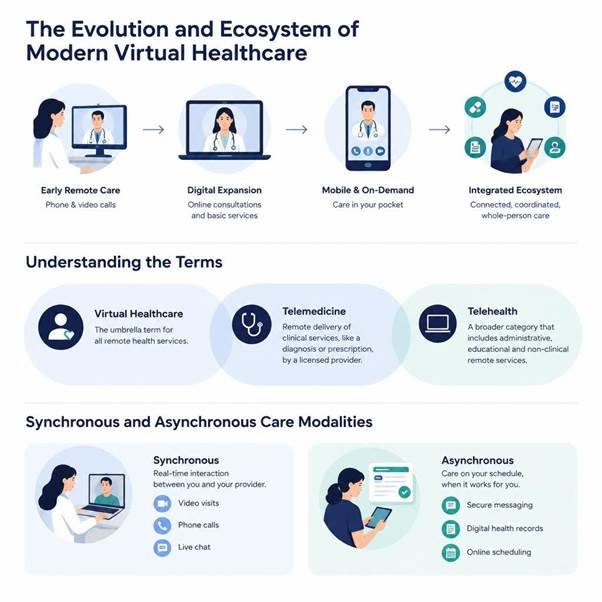
To navigate the current landscape, it is essential to distinguish between the terms often used interchangeably. While “virtual healthcare” serves as an umbrella term for all remote health services, “telemedicine” typically refers to the remote delivery of clinical services—like a diagnosis or a prescription—by a licensed provider. “Telehealth,” by contrast, is a broader category that includes administrative, educational, and non-clinical remote services.
Synchronous and Asynchronous Care Modalities
Virtual care is delivered through two primary modalities: synchronous and asynchronous. Synchronous care involves real-time interaction, such as a live video call or a phone consultation, allowing for immediate feedback and visual assessment. These visits are highly effective for urgent care needs or complex discussions where non-verbal cues are vital.
Asynchronous care, often called “store-and-forward” or e-visits, allows patients to submit information via secure portals, such as photos of a rash or a list of symptoms, which a provider then reviews to create a treatment plan. This model offers incredible flexibility, as it does not require both parties to be online simultaneously, significantly reducing wait times and allowing for rapid turnaround in non-emergency situations.
Remote Patient Monitoring and Wearable Technology
The integration of remote patient monitoring (RPM) has transformed the management of chronic conditions. By utilizing wearable devices—such as blood pressure cuffs, continuous glucose monitors, or smartwatches—patients can transmit vital biometric data directly to their care team. This constant stream of information allows providers to identify potential health complications before they become emergencies, shifting the focus of medicine from reactive treatment to proactive prevention.
Operational Support and Practice Management
Behind every successful virtual visit is a sophisticated layer of administrative infrastructure. As healthcare systems scale their remote offerings, the demand for medical virtual assistants has grown. These professionals help manage the logistical backbone of virtual care, from handling patient intake and triage to coordinating complex scheduling across different time zones. By offloading these administrative burdens, clinical teams can focus entirely on patient outcomes rather than operational bottlenecks.
Clinical Applications Across the Care Continuum
Virtual healthcare is no longer limited to minor ailments. It has become a cornerstone of modern medicine, supporting everything from routine primary care to complex specialty management.
Virtual Primary Care and Chronic Disease Management
For patients living with hypertension, diabetes, or asthma, consistent follow-up is the most significant factor in long-term health. Virtual care facilitates this through 1:1 nurse coaching and regular digital check-ins. These interactions ensure that patients remain compliant with their treatment plans, understand their medication regimens, and can report side effects in real-time, leading to better clinical outcomes and fewer hospital readmissions.
Behavioral Health and Virtual Healthcare Services for Addiction Recovery
Perhaps no field has benefited more from the digital shift than behavioral health. The privacy and comfort of one’s home have made therapy more accessible for those struggling with anxiety, depression, or substance use disorders. Specialized platforms now offer comprehensive support, including telemedicine-based Suboxone treatment, which allows patients to receive evidence-based care for opioid use disorder without the stigma or logistical hurdles of traditional in-person clinic visits.
Specialized Pediatric and Therapy Modalities
Virtual care also extends into rehabilitation and specialized pediatric services. Speech-language pathologists, occupational therapists, and physical therapists are now delivering high-quality care remotely, using video to guide patients through exercises or developmental assessments. Furthermore, lactation consulting and pediatric nutrition counseling have become staples of the virtual care model, providing parents with expert guidance during critical stages of child development.
Clinical Safety, Technology Integration, and Regulatory Standards

Safety and privacy are the bedrocks of virtual healthcare. All reputable platforms utilize HIPAA-compliant, encrypted software to ensure that patient data remains confidential.
Data Privacy, Licensure, and Prescription Safeguards
Providers must adhere to strict state-based licensure laws, meaning they must be licensed in the state where the patient is located during the consultation. Furthermore, while virtual care is powerful, it is subject to rigorous oversight regarding controlled substances. DEA regulations generally restrict the virtual prescription of certain narcotics, requiring providers to use multi-factor authentication and secure pharmacy integration to prevent fraud and ensure medication safety.
The Role of Health AI and Diagnostic Workflows in Virtual Healthcare Services
Artificial Intelligence (AI) is increasingly acting as a force multiplier in virtual care. AI-driven triage tools can analyze patient-reported symptoms to prioritize cases for human providers, ensuring that those in the most need receive attention first. Additionally, AI helps streamline diagnostic workflows by automating the ordering of lab tests and integrating results directly into the patient’s electronic health record, creating a cohesive view of the patient’s health history.
Key Advantages and Practical Limitations of Virtual Care
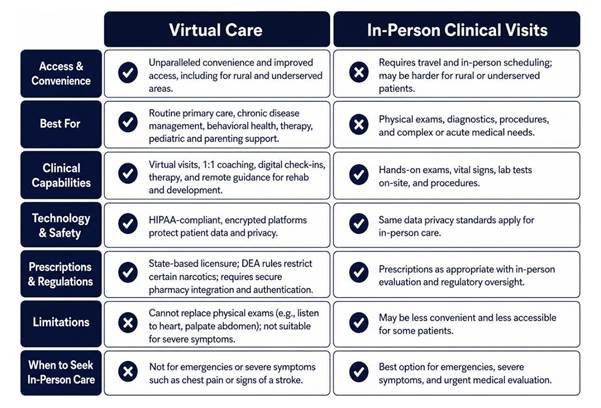
While virtual care offers unparalleled convenience and improved access for those in rural or underserved areas, it has limitations. A virtual visit cannot replace a physical examination, such as listening to heart sounds or palpating an abdomen. Consequently, virtual care is best used as a supplement to, rather than a total replacement for, in-person care. Patients experiencing severe symptoms—such as chest pain or signs of a stroke—should always seek emergency, in-person medical attention.
Frequently Asked Questions About Virtual Healthcare
What is the difference between telehealth, telemedicine, and virtual healthcare?
“Virtual healthcare” is the overarching term for all remote services. “Telemedicine” refers specifically to clinical services (like a doctor diagnosing a flu), while “telehealth” includes a wider array of services, including administrative support, health education, and professional training.
How are prescriptions and diagnostic lab tests handled during remote appointments?
If a provider determines a prescription is necessary, they can send it electronically to a local pharmacy of your choice or via a mail-order service. For lab tests, the provider issues an electronic order that you can take to a nearby diagnostic facility, such as Quest or Labcorp, for sample collection.
What equipment and technology are required to attend a virtual visit?
Most virtual visits require only a smartphone, tablet, or computer with a stable internet connection. You will generally need a web browser or a specific app provided by your healthcare system. Before your appointment, ensure your camera and microphone are enabled, and find a private, well-lit space to ensure a productive conversation.
Conclusion
The transition toward digital-first medicine represents one of the most significant advancements in modern healthcare. By leveraging virtual healthcare services, we are building a system that is more resilient, accessible, and centered around the patient’s actual life, rather than the constraints of a clinic’s physical walls. As we continue to integrate these tools, the focus remains on maintaining the highest standards of clinical excellence while ensuring that every patient, regardless of their location, has the support they need to thrive.

