

Key Takeaways
- Rust stains return when the source of iron, moisture, or runoff is still present.
- Concrete, brick, stone, vinyl, tile, and painted metal each need a surface-appropriate approach.
- Testing a cleaner in a hidden area first can prevent etching, discoloration, or coating damage.
- Better drainage, sprinkler adjustments, and protected metal help prevent repeat staining.
- Early inspections are easier and safer than repeatedly using stronger cleaning chemicals.
Outdoor rust stains can be especially frustrating for Rock Hill property owners because the orange marks often reappear shortly after cleaning a patio, driveway, walkway, or exterior wall. Effective rust removal in Rock Hill, SC, starts with more than treating the visible discoloration. It means identifying what is feeding the stain and stopping that source before it has time to spread again. Rock Hill’s warm, humid summers, frequent rain, irrigation systems, and leaf debris can all create damp conditions around outdoor surfaces. When moisture sits beneath metal furniture, near rusty fasteners, or below a leaking gutter, it gives corrosion a chance to continue. It lets rust-colored runoff soak into porous concrete and masonry.
Why Rust Stains Keep Coming Back
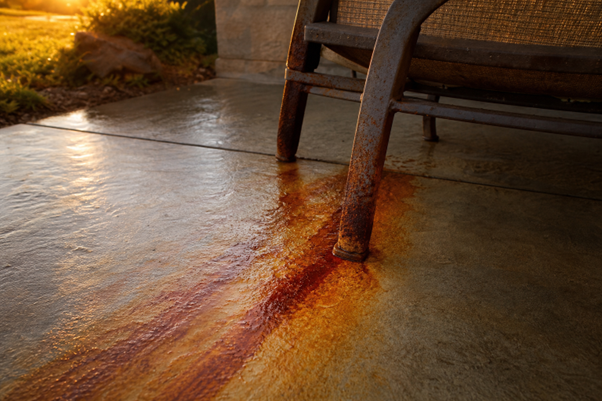
A clean-looking surface does not necessarily mean the problem is solved. Rust may continue forming on chair legs, railings, planters, metal edging, screws, grill wheels, fence brackets, or roof components. Rainwater and sprinkler overspray can then carry the residue onto nearby concrete, brick, siding, or pavers. Iron reacts with water and oxygen to create corrosion products that appear red, orange, or brown. Smooth vinyl and glazed tile may release a fresh stain more easily than porous concrete, brick, grout, or natural stone. Those absorbent materials can retain minerals beneath the surface, making a faint mark more noticeable after the next wet-dry cycle. For storefronts, office parks, and other properties where exterior appearance matters, regular commercial business signage cleaning in Rock Hill, SC, can also help reveal rust streaks from mounting hardware, metal awnings, and water runoff before they become a more visible problem.
Start With the Source, Not the Stain
Before choosing a cleaner, inspect the entire area around the stain. A circular mark beneath a patio chair usually points to corroding furniture feet. A narrow vertical streak on a wall may come from a rusty screw, damaged flashing, gutter overflow, or a metal fixture above it.
- Look above, below, and beside the stained area for possible runoff paths.
- Check gutters, downspouts, sprinkler heads, drains, edging, and metal furniture.
- Move planters, grills, chairs, and storage items that may trap moisture.
- Inspect bolts, brackets, railings, fence hardware, and chipped paint.
- Watch the location after irrigation or rainfall to see where water travels.
Sprinkler water deserves special attention. Water with dissolved iron can leave reddish or orange staining as it dries, and the EPA notes that iron can cause rusty color and staining even though it is addressed as a secondary, aesthetic water-quality concern. Iron-related orange staining may require a sprinkler adjustment, water testing, or treatment of the water source rather than repeated surface cleaning.
Match the Cleaning Method to the Surface
One rust remover is not right for every material. Strong acids can permanently change the appearance of some outdoor surfaces, while abrasive tools can scratch finishes or leave behind metal particles that create additional staining.
- Concrete: Spot treatment may work well, but harsh products can etch or lighten the finish.
- Brick: Absorbs moisture and cleaning products, so use controlled applications and thorough rinsing.
- Natural stone: Limestone, marble, and similar stone can react badly to acidic cleaners.
- Vinyl: Usually benefits from a gentler product and a complete rinse.
- Tile and grout: Consider both the tile glaze and the condition of the grout joints.
- Painted metal: Clean away loose corrosion, repair the coating, and protect exposed metal.
A Safer Step-by-Step Rust Stain Treatment
- Remove or repair the source. Replace badly corroded hardware or move the item causing the stain.
- Clear loose debris. Rinse away leaves, dirt, pollen, and grit before treatment.
- Read the product label. Confirm it is intended for the surface being cleaned.
- Test a hidden spot. Check for fading, etching, or changes in texture before treating a larger area.
- Protect nearby materials. Cover plants, painted trim, and surfaces that could be affected by runoff.
- Apply sparingly. Use only the amount needed for the stained area.
- Agitate gently. A soft brush is generally safer than steel wool or a wire brush.
- Rinse completely. Do not let cleaner residue dry on the surface.
Common Mistakes That Make Rust Stains Worse
Using muriatic acid without verifying compatibility, mixing cleaners, leaving products on too long, and blasting soft masonry with excessive pressure can create damage that is harder to repair than the original stain. Chemical splashes and runoff can also harm landscaping. Wear gloves and eye protection, follow every label direction, and avoid using chemicals where they can flow into planted areas or storm drains.
How to Prevent New Rust Stains
- Use rubber or plastic feet beneath outdoor chairs, tables, and planters.
- Keep metal furniture slightly raised so water can dry beneath it.
- Touch up chipped paint on railings, gates, and metal fixtures promptly.
- Replace rusted screws, brackets, and fasteners before runoff begins.
- Adjust sprinklers away from walls, walkways, signs, and furniture.
- Rinse fertilizer spills quickly, especially near concrete and pavers.
- Clear leaves from drains, patios, and low spots that hold moisture.
- Use a compatible sealer on eligible porous surfaces after they are fully clean and dry.
A Simple Monthly Inspection Routine
Take a five-minute walk around the property after a heavy rain or irrigation cycle. Look for fresh orange drips, wet patches, puddling, peeling paint, and metal parts that stay damp. Take photos of recurring areas so it is easier to identify whether the stain is growing, moving, or connected to a specific object.
New Ideas in Corrosion Protection
Modern corrosion control increasingly focuses on longer-lasting barriers and lower-impact coating systems. The science behind corrosion protection is broad, but the practical goal for homeowners remains simple: keep water off exposed metal, maintain protective paint or coatings, and correct small failures before they turn into recurring stains.
When to Call for Professional Help
Professional help is sensible when stains cover multiple surfaces, recur despite source repairs, affect delicate natural stone, appear near landscaping, or persist after careful, surface-appropriate treatment. It is also a good option when prior DIY cleaning has altered the color or texture of concrete, brick, paint, or tile.
Frequently Asked Questions
Will pressure washing remove rust stains?
Pressure may remove loose dirt and surface residue, but it often will not remove embedded rust staining. Excessive pressure can also damage weak concrete, grout, or masonry.
Can vinegar remove rust from concrete?
Vinegar may affect light staining, but it is acidic and may not be appropriate for every surface. A labeled cleaner, a small test area, and full rinsing are safer choices.
Should a rust stain be sealed after cleaning?
A compatible sealer may help protect some porous materials, but only after the surface is clean, dry, and free of the active rust source.
Conclusion
Lasting rust control in Rock Hill starts with identifying the cause, not simply reaching for a stronger cleaner. Inspect the affected area carefully and look for ongoing moisture, damaged coatings, leaking gutters, metal contact, irrigation overspray, or other conditions that may be feeding the stain. Once the source is identified, remove or correct it before choosing a treatment that fits the specific material and level of rust. Use appropriate cleaning methods, rinse thoroughly, and avoid aggressive techniques that could damage siding, concrete, masonry, or painted surfaces. Regular maintenance can also help prevent new stains from developing. When rust repeatedly returns after cleaning, the real solution is usually somewhere above, below, or beside the orange mark, and addressing that underlying condition is often more effective than repeatedly treating the visible stain.

