

Understanding Comprehensive Dental Care vs. Preventive Care
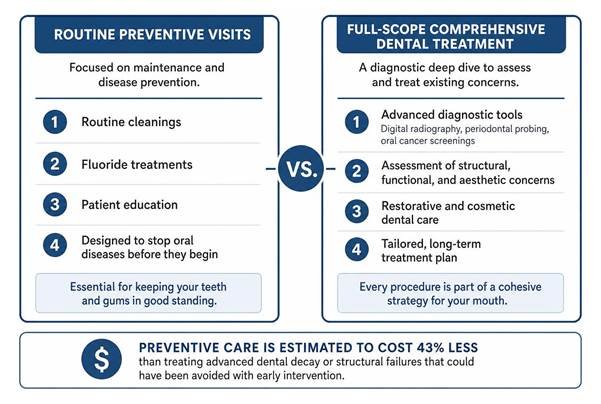
To appreciate the value of a comprehensive approach, it is helpful to distinguish it from standard preventive care. Preventive dentistry is primarily focused on maintenance—it includes routine cleanings, fluoride treatments, and patient education designed to stop oral diseases before they begin. These visits are essential for keeping your teeth and gums in good standing, but they are generally limited in scope.
Comprehensive dental care, by contrast, takes a diagnostic deep dive into your oral environment. While it certainly includes preventive measures, it also encompasses the assessment and treatment of existing structural, functional, and aesthetic concerns. Research consistently highlights the fiscal and physical benefits of this proactive mindset; for instance, preventive care is estimated to cost 43% less than the expense of treating advanced dental decay or structural failures that could have been avoided with early intervention.
Scope and Key Services of Comprehensive Dental Care
A comprehensive dental center serves as a hub for your oral health, utilizing advanced diagnostic tools that go far beyond a visual mirror exam. During these sessions, practitioners often utilize digital radiography to identify hidden decay between teeth or below the gumline. They perform thorough periodontal probing to measure gum health and conduct oral cancer screenings to ensure that soft tissues are free of abnormalities. By integrating these diagnostic findings into a long-term treatment plan, your dentist can provide restorative and cosmetic dental care that is tailored to your specific needs, ensuring that every procedure—from a simple filling to a complex crown—is part of a cohesive strategy for your mouth.
The Systemic Link: Oral Health and Whole-Body Wellness
We now understand that the mouth is not an isolated system; it is a gateway to the rest of the body. Chronic inflammation in the gums, often caused by periodontal disease, has been linked to systemic conditions such as cardiovascular disease and poor glycemic control in diabetic patients. Furthermore, hormonal changes during pregnancy can increase the risk of gingivitis, making specialized dental care during this time critical. By viewing oral health as a pillar of general medicine, comprehensive dental practices act as a partner in your overall wellness, using diagnostic biomarkers to help you manage your health more effectively.
Core Clinical Disciplines in a Full-Spectrum Practice
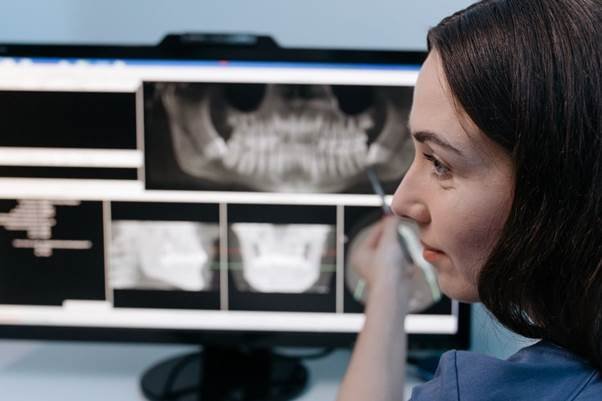
A full-spectrum practice thrives on a multidisciplinary approach. Rather than referring you to different specialists across the city, a comprehensive center coordinates care under one roof. This integration ensures that your restorative work, orthodontic needs, and surgical requirements are handled by a team that communicates internally, leading to more predictable outcomes and a more seamless patient experience.
Restorative and Periodontal Rehabilitation
Restorative dentistry is the backbone of functional health. When teeth are damaged or missing, modern dentistry offers sophisticated solutions. Dental implants, for example, use titanium posts that fuse with the jawbone to act as artificial roots, preventing bone loss and providing a stable foundation for replacement teeth. Alongside implants, crowns and bridges are used to restore the shape and strength of damaged teeth. Crucially, these restorative efforts are supported by periodontal services. If a patient is suffering from gum disease, a practice will employ scaling and root planing to remove bacteria and halt the progression of the infection, ensuring that any restorative work is placed on a healthy, stable base.
Enhancing Smiles with Cosmetic and Orthodontic Solutions
A comprehensive plan also considers the aesthetic and alignment aspects of your smile. Cosmetic procedures like porcelain veneers, professional whitening, and dental bonding are designed to enhance the appearance of your teeth, while orthodontic solutions—ranging from traditional braces to modern clear aligners and 3D-printed appliances—work to correct bite issues and alignment. By addressing symmetry and spacing, these treatments not only boost self-confidence but also make teeth easier to clean, further supporting your long-term oral health.
Pediatric, Emergency, and Special Needs Services
Comprehensive care is inclusive of all ages and life stages. Experts recommend that a child’s first dental visit occur by their first birthday or when the first tooth appears, whichever happens first, to set the stage for a lifetime of healthy habits. For families, having a one-stop practice that offers personalized advanced treatments—including space maintainers for children, urgent trauma care for accidents, and sedation options for anxious patients—provides peace of mind that every member of the family is covered, regardless of their unique requirements.
What Happens During an Initial Comprehensive Examination
When you arrive for your first comprehensive exam, you can expect a thorough process that typically lasts between 30 and 60 minutes. This time is dedicated to building a complete picture of your health. The visit usually includes:
- A detailed medical and dental history review: Understanding your general health and previous treatments.
- Comprehensive imaging: Digital X-rays or 3D scans to visualize structures that cannot be seen with the naked eye.
- Clinical assessment: A full head and neck exam, soft tissue screening, and a detailed check of each tooth and the surrounding gum tissue.
- Personalized roadmap: A discussion of findings and a phased treatment plan that addresses immediate concerns while prioritizing long-term prevention.
This initial roadmap serves as your baseline. Following this, most providers recommend a six-month recall interval, though this may be adjusted based on your specific risk factors or the need for periodontal maintenance.
Navigating Cost, Insurance, and Affordability
We recognize that the scope of comprehensive care can sometimes raise questions about affordability. However, many practices are committed to making these services accessible. Options often include dental school clinics, where supervised students provide high-quality care at a lower cost, as well as in-house dental savings plans, insurance coordination, and flexible financing. When you discuss your treatment plan with your office, don’t hesitate to ask about phased treatment, which allows you to prioritize the most urgent needs while scheduling other procedures over a timeframe that fits your budget.
Frequently Asked Questions About Complete Oral Health
What distinguishes preventive care from comprehensive dental care?
Preventive care is focused on maintenance and education, such as routine cleanings, to avoid future issues. Comprehensive dental care includes that preventive foundation but adds a layer of deep diagnostics and intervention, allowing for the treatment of existing structural, functional, or aesthetic problems.
How often should patients schedule a full oral evaluation?
For most patients, a six-month recall is the standard to monitor health and catch changes early. However, if you are undergoing periodontal maintenance or have high-risk factors, your dentist may recommend more frequent visits to ensure stability.
Can urgent care clinics handle acute dental emergencies?
While general urgent care clinics can provide temporary relief for pain or swelling, they typically lack the specialized dental equipment and expertise required for definitive treatment, such as root canals, extractions, or trauma stabilization. A comprehensive dental practice with an emergency protocol is always the preferred destination for acute dental issues.
Conclusion
Embracing comprehensive dental care is an investment in your future. By choosing a model that prioritizes proactive, multidisciplinary planning, you are doing more than just fixing teeth—you are safeguarding your systemic health and ensuring that your smile remains functional and confident for a lifetime. Whether you are due for a routine check-up or seeking a more advanced restorative approach, the most effective path to wellness is one that views your oral health as an essential part of your whole-body journey. We encourage you to schedule your comprehensive exam today and take the first step toward a healthier, more vibrant you.

